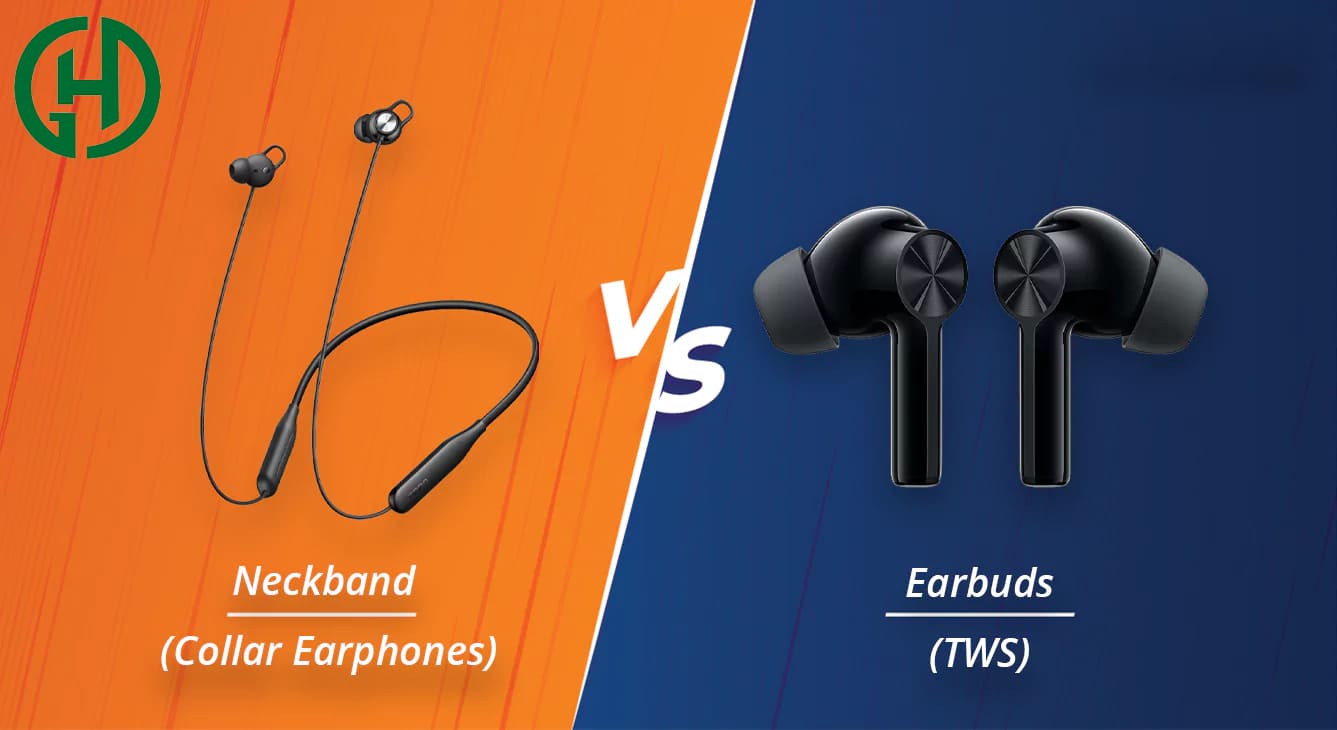
A few years ago, choosing between wireless earbuds and neckbands was simple. Neckbands were practical and affordable, while earbuds were seen as a premium luxury. But in 2026, that line has blurred.
Now, you’ll find budget earbuds with impressive sound and premium neckbands with advanced features. Prices overlap, designs have improved, and both options promise convenience. So the real question is no longer “which is better?”—it’s which one fits your lifestyle better.
Let’s walk through this in a simple, real-world way.
Everyday Comfort and Practical Use
Imagine starting your day. You pick up your phone, grab your audio device, and head out—maybe for a commute, a walk, or just a busy day of work.
If you’re using wireless earbuds, the experience feels almost invisible. They’re small, lightweight, and sit neatly in your ears. There are no wires to think about. You can slip them into your pocket, take calls instantly, or listen to music without drawing attention.
This makes earbuds incredibly convenient for short, frequent use. Whether you’re taking quick calls, listening to a podcast while making coffee, or stepping out for errands, they just fit seamlessly into your routine.
But that same compact design comes with a trade-off. Because they are so small, they’re also easier to lose. Many people have experienced that moment of panic—one earbud missing, rolling somewhere under a couch or left behind in a cab.
Now think about neckbands.
They sit comfortably around your neck, with small wires connecting the earbuds. At first glance, this might seem a bit old-school in 2026, but the practicality becomes clear very quickly.
You don’t have to worry about losing them. If you take them out of your ears, they simply hang around your neck. Some even snap together magnetically, which feels satisfying and keeps things tidy.
For longer use—like working from home, attending online meetings, or listening to music for hours—neckbands can feel more reliable. There’s less need to constantly put them back into a case or worry about battery levels during the day.
So when it comes to comfort and everyday use, the difference is subtle but important:
- Earbuds feel modern, minimal, and effortless
- Neckbands feel secure, practical, and dependable
Your daily habits will naturally push you toward one over the other.
Sound, Battery, and Performance
Now let’s talk about what really matters once the music starts playing.
In 2026, both earbuds and neckbands have come a long way. Even budget options offer clear sound, decent bass, and stable connectivity. But there are still some meaningful differences.
With wireless earbuds, the focus is on balanced performance in a compact form. You’ll find features like active noise cancellation (ANC), spatial audio, and touch controls—even in mid-range models.
The sound quality is generally crisp and immersive, especially for casual listening. Whether you’re streaming music, watching videos, or taking calls, earbuds handle everything smoothly.
However, battery life is where things get interesting.
Earbuds rely on their charging case. You might get 5–8 hours of listening on a single charge, but the case extends that to a full day or more. It’s convenient, but it also means you need to remember to carry and charge the case regularly.
Neckbands take a different approach.
Because they have more physical space, they can pack in larger batteries. This often translates to longer continuous playback, sometimes lasting an entire day on a single charge without needing a case.
If you’re someone who listens to music for long stretches—during work, travel, or workouts—this can make a big difference.
In terms of sound, neckbands often lean toward stronger bass and louder output. They’re great for people who enjoy energetic music or need that extra volume in noisy environments.
Call quality is another factor. Neckbands tend to have slightly better microphone placement, which can result in clearer voice calls, especially outdoors.
So when comparing performance:
- Earbuds offer advanced features and a premium feel in a small package
- Neckbands offer longer battery life and consistent performance over time
Neither is strictly better—it depends on how you use them.
Lifestyle Fit and Buying Decision
At this point, the choice becomes less about specs and more about how these devices fit into your life.
Think about your routine again.
If you’re always on the move—jumping between meetings, commuting, or traveling light—wireless earbuds make a lot of sense. They’re easy to carry, quick to use, and blend into your day without effort.
They also pair well with modern habits. Watching short videos, taking quick calls, or switching between devices feels natural with earbuds. And let’s be honest—they look more “current.” For many people, that matters.
Now consider a different lifestyle.
Maybe you work long hours at a desk. Maybe you attend multiple calls throughout the day. Or you simply don’t want to worry about charging your device frequently.
In these situations, neckbands quietly shine.
You can wear them for hours without discomfort. You don’t have to keep putting them in and out of a case. And you’re less likely to misplace them.
They’re also great for workouts and outdoor use. Whether you’re jogging, walking, or traveling, the added security of having them around your neck can be reassuring.
There’s also a psychological factor that often gets overlooked.
Earbuds feel like a “grab-and-go” device. They’re perfect for quick, flexible use. Neckbands feel more like a “set-it-and-forget-it” device—you put them on, and they stay with you throughout the day.
So instead of asking which one is better, it helps to ask:
- Do you prefer freedom and minimalism, or security and consistency?
- Do you use your audio device in short bursts, or for long sessions?
- Are you comfortable managing a charging case, or do you prefer a single device with longer battery life?
In 2026, both wireless earbuds and neckbands are good enough that you won’t feel like you’re compromising either way.
You’re simply choosing the one that fits your rhythm.
And once you make that choice, it tends to feel obvious—like it was always the right one for you.