I used to think choosing an outfit was just about what looked good. But over time, I realized it’s more about where you’re going and how you want to feel.
There were days I wore something stylish but felt completely out of place. And there were other days when my outfit just fit the moment perfectly—and everything felt easier. That’s when it clicked.
Clothing isn’t just about fashion. It’s about context.
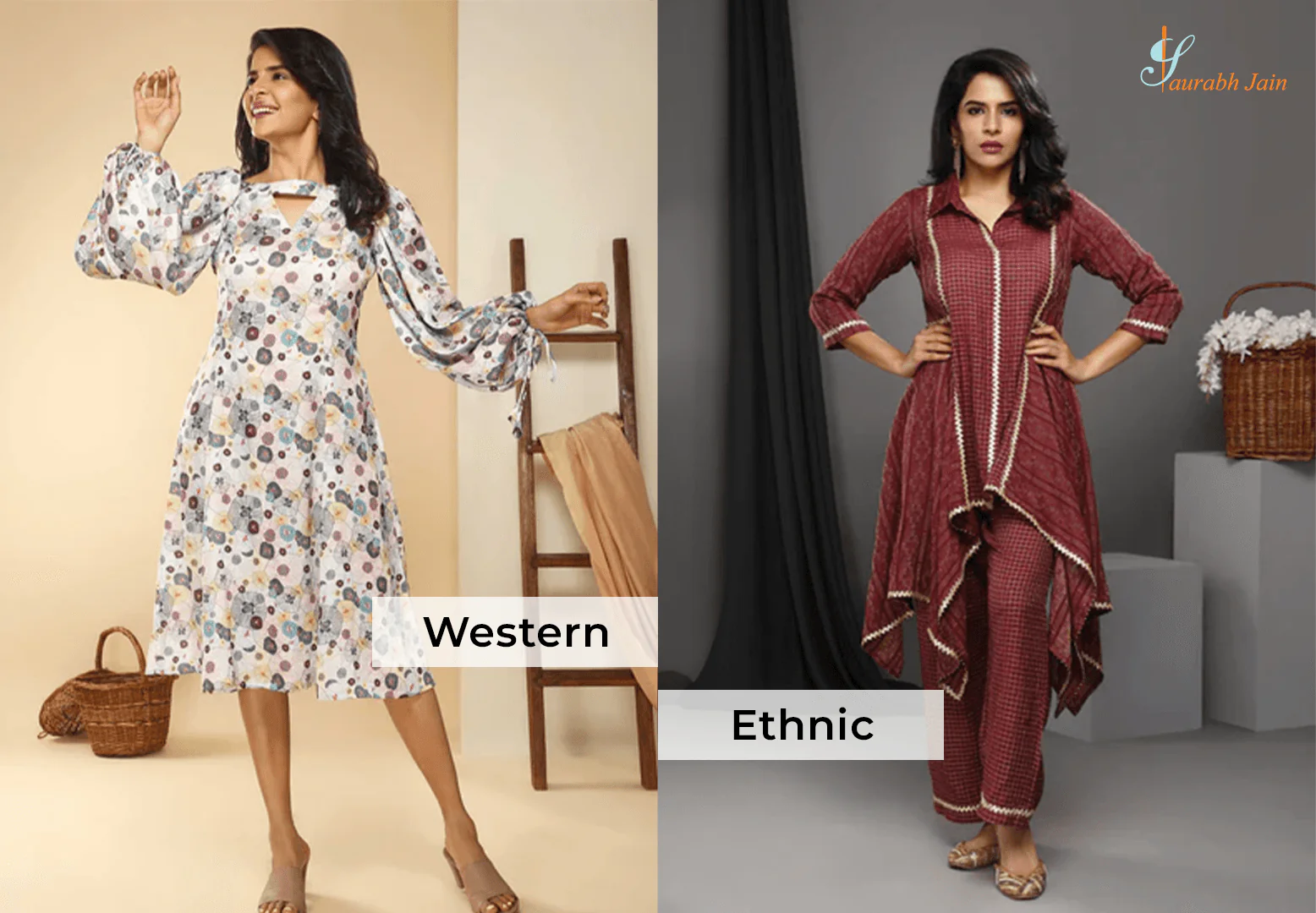
And nothing highlights this better than the choice between ethnic wear and western wear.
Both have their own charm. Both can look amazing. But they serve different purposes depending on the occasion. Once you understand that, getting dressed becomes much simpler.
Everyday Life: Comfort, Simplicity, and Practical Choices
Let’s start with the most common part of life—your daily routine.
Think about a typical weekday. You might be going to work, college, running errands, or just stepping out for a few hours. In these situations, comfort and practicality matter more than anything else.
This is where western wear naturally fits in.
A simple t-shirt, a pair of jeans, maybe a shirt or a jacket—it’s easy, quick, and works almost everywhere. You don’t have to think too much about matching or styling. It’s designed for movement and flexibility.
I remember how much easier mornings became once I started relying more on simple western outfits. I didn’t have to spend time figuring things out. I just picked something that felt right and moved on with my day.
Western wear also adapts well to different environments.
Whether you’re in an office, a café, or traveling, it rarely feels out of place. That’s its biggest strength—it blends in effortlessly.
That doesn’t mean ethnic wear has no place in daily life.
In fact, in recent years, there’s been a rise in casual ethnic pieces—like kurtas paired with jeans or simple cotton sets that feel light and breathable. These can work really well, especially in warmer climates or more relaxed settings.
But overall, for everyday use, western wear tends to feel more practical.
It’s not about being better—it’s about being easier.
And sometimes, that’s exactly what you need.
Celebrations and Special Moments: Dressing for the Occasion
Now think about a completely different situation.
A wedding, a festival, a family gathering, or any event where the atmosphere feels special.
This is where everything changes.
You don’t just want to feel comfortable—you want to feel part of the moment. And that’s where ethnic wear truly stands out.
There’s something about traditional clothing that instantly elevates the occasion.
The fabrics, the colors, the detailing—they all come together to create a look that feels rich and meaningful. Whether it’s a kurta, sherwani, saree, or lehenga, ethnic wear carries a sense of culture and celebration that western outfits often don’t.
I’ve noticed this personally.
The moment you wear something traditional, your mindset shifts slightly. You feel more connected to the event, more aware of the atmosphere around you.
And it’s not just about how you feel—it’s also about how others perceive you.
At cultural or festive events, wearing ethnic clothing shows that you understand the setting. It feels respectful, appropriate, and naturally stylish.
That doesn’t mean western wear has no role here.
There are modern celebrations—like parties, dinners, or semi-formal gatherings—where western outfits can work beautifully. A well-fitted blazer, a dress, or even a smart casual outfit can look elegant and polished.
But when the event has cultural or traditional significance, ethnic wear often feels more “complete.”
It’s not just clothing—it’s part of the experience.
Finding Your Balance: Mixing Style with Context
At some point, you stop thinking in terms of “ethnic vs western” and start thinking in terms of what works for you in that moment.
Because the truth is, it’s not always one or the other.
In 2026, fashion is becoming more flexible. People are mixing elements from both styles to create something that feels personal.
You’ll see someone wearing a kurta with sneakers. Or pairing a traditional jacket with jeans. These combinations blur the line between ethnic and western wear, creating outfits that are both comfortable and unique.
I tried this myself once—pairing a simple kurta with denim instead of traditional bottoms. It felt different at first, but surprisingly natural. It gave me the comfort of western wear with the character of ethnic style.
That’s when I realized something important.
You don’t always have to choose one side.Sometimes, the best outfits come from combining both in a way that fits your personality.
Another thing that changes over time is your understanding of occasions.
Earlier, I used to categorize events strictly—this is formal, this is casual, this is traditional. But now, I look at the vibe instead.
Is the event relaxed or structured? Is it personal or professional? Is it rooted in culture or more modern?
Once you answer those questions, the outfit becomes obvious.
And then there’s confidence.
You can wear the most perfect outfit for an occasion, but if you don’t feel comfortable in it, it shows. On the other hand, when you feel good in what you’re wearing, even a simple outfit can stand out.
That’s why the final decision is always personal.Ethnic wear and western wear are just tools.What matters is how you use them.
Over time, I’ve stopped seeing fashion as a set of rules.
It’s more like a conversation between you and the moment you’re in.
Some days call for simplicity. Some moments deserve something more expressive.And once you understand that, choosing between ethnic and western wear doesn’t feel confusing anymore.
It just feels natural.