A few years ago, 5G felt like the future—something exciting, fast, and just out of reach. Carriers advertised lightning speeds, phone brands highlighted “next-gen connectivity,” and upgrading to a 5G phone seemed like the obvious next step.
Now in 2026, things look very different.
5G is no longer new. Most smartphones support it, networks have expanded, and prices have come down. But the real question hasn’t changed: Do you actually need it?
Because when you step away from marketing and look at everyday use, the answer becomes more nuanced than you might expect.
Speed, Performance, and What You Actually Notice
Let’s start with the most obvious difference—speed.
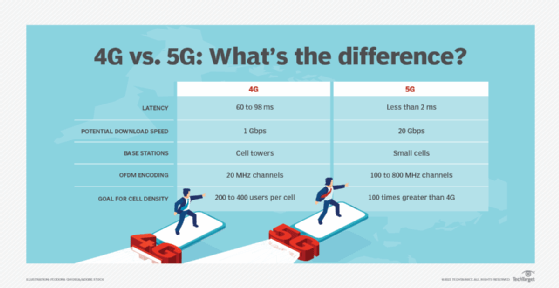
On paper, 5G is significantly faster than 4G. In real-world conditions, 5G networks often deliver speeds around 100–250 Mbps, with peaks reaching much higher . In comparison, 4G typically offers speeds up to around 100 Mbps under ideal conditions .
That sounds like a huge gap—and technically, it is.
But here’s the important part: most everyday activities don’t need that extra speed.
Scrolling social media, watching YouTube, checking emails, or even streaming HD videos—all of this works perfectly fine on 4G. In fact, 4G was the technology that made these experiences smooth in the first place.
Where 5G starts to feel different is in more demanding situations.
Downloading large files, streaming in 4K, using cloud gaming services, or working with high-quality video calls—these tasks benefit from faster speeds and lower latency. 5G also reduces delay significantly, with latency dropping to around 5–20 milliseconds, compared to 30–70 milliseconds on 4G .
That lower latency doesn’t just make things faster—it makes them feel more responsive.
Video calls look smoother. Online games react quicker. Apps load almost instantly.
But again, it comes back to your usage.
If your phone habits are simple and consistent, the difference between 4G and 5G might feel surprisingly small. Many users even report that outside of speed tests, they barely notice a major change in daily use.
So while 5G is clearly better in terms of raw performance, the real-world impact depends entirely on how much you push your phone.
Coverage, Battery, and Real-World Trade-offs
Now let’s move away from speed and talk about something just as important—reliability.
Because a faster network doesn’t always mean a better experience.
In 2026, 5G coverage has improved a lot, especially in cities. But it’s still not as consistent as 4G in many areas. 4G remains widely available and continues to be the backbone of mobile connectivity worldwide .
This creates an interesting situation.
Your 5G phone might constantly switch between 5G and 4G depending on where you are. Sometimes you’ll get blazing-fast speeds, and other times it’ll feel exactly like a regular 4G connection.
In some cases, 4G can even feel more stable—especially indoors or in less densely covered areas.
Then there’s battery life.
5G connectivity can consume more power, especially when the phone is frequently searching for or switching between networks. This isn’t as big of a problem as it was a few years ago, but it still exists.
Many users notice that forcing their phone to stay on 4G can slightly improve battery life, especially during long days.
Another factor is network congestion.
This is where 5G actually has an advantage. It’s designed to handle more devices at once, which means better performance in crowded areas like stadiums, airports, or busy city centers .
If you’ve ever struggled with slow internet in a crowded place, 5G can make a noticeable difference.
But outside of those situations, 4G still holds its ground surprisingly well.
So the trade-off looks like this:
- 5G offers faster speeds and better performance in high-demand scenarios
- 4G offers wider coverage and consistent reliability
And depending on where you live and how you use your phone, one may matter more than the other.
So, Should You Upgrade in 2026?
This is where everything comes together.
Because the decision to upgrade isn’t really about technology—it’s about timing and personal use.
If you’re buying a new phone in 2026, it almost doesn’t matter anymore. Most phones come with 5G by default, even in the budget segment. So in that case, you’re not really “paying extra” for 5G—it’s just part of the package.
But if you already have a good 4G phone, the decision becomes more interesting.
Ask yourself a few simple questions.
Do you regularly download large files, stream high-resolution content, or use your phone as a hotspot?
Do you live in an area with strong and stable 5G coverage?
Do you want your device to feel more “future-proof” for the next few years?
If the answer to most of these is yes, then upgrading makes sense. You’ll actually benefit from what 5G offers.
But if your usage is basic—social media, calls, messaging, occasional streaming—then 4G is still more than enough.
Even today, 4G handles everyday tasks comfortably, and for many users, it continues to deliver a smooth experience without any noticeable limitations.
There’s also a subtle psychological factor here.
5G feels like progress. It feels modern. And sometimes, that alone is enough reason for people to upgrade.
But when you strip that away, the real question becomes simpler:
Will this upgrade change how I use my phone?
If the answer is no, then you’re probably fine sticking with 4G a little longer.
If the answer is yes—if you want faster downloads, smoother performance, and a more future-ready device—then 5G starts to make more sense.
In 2026, we’re no longer at the beginning of the 5G journey. But we’re also not at the point where 4G feels outdated.
We’re in the middle.
And that’s exactly why the choice isn’t obvious—it’s personal.